Thread Lifting


Thread lifting uses medical threads to lift sagging skin physically, for facial lifting and firmness.
The type, number and placement of threads change with each face, so the design is decided individually.
Swelling, bruising, dimpling and rippling are known effects of thread lifting; the design and technique aim to keep them to a minimum.
The type, number and placement of threads change with each face, so the design is decided individually.
Swelling, bruising, dimpling and rippling are known effects of thread lifting; the design and technique aim to keep them to a minimum.
KEY POINT
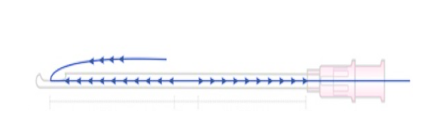
Bidirectional cog · Fixed type

Bidirectional cog
Bidirectional cog threads hold the tissue from both directions

Fixed type
Fixing threads anchor the tissue from every direction
for a firmer hold
for a firmer hold


WHY EVERYOU
Safety comes first
The director carries out every procedure personally, with the design drawn around your own face.
Local anaesthesia is used so that the procedure is comfortable.
Local anaesthesia is used so that the procedure is comfortable.
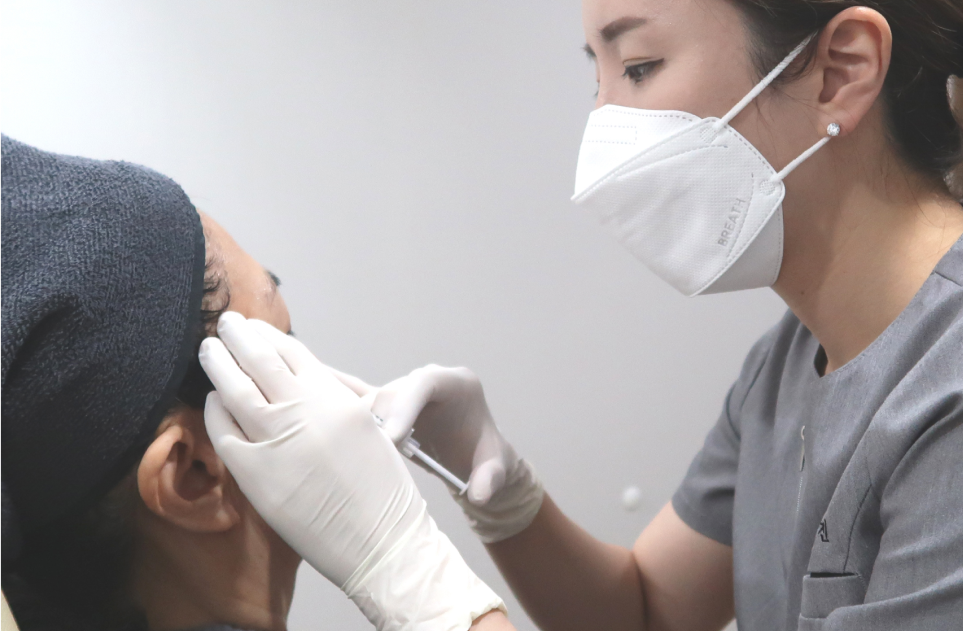
Thread lifting at
EVERYOU Clinic

1
Class 4 PDO
Polydioxanone (PDO) sutures classified as Class 4 medical devices
by the Korean Ministry of Food and Drug Safety.
by the Korean Ministry of Food and Drug Safety.
2
Press Sculpting
The PDO thread is pressed to form barbs along its length.
The barbs hold tissue in three dimensions rather than pulling in one direction.
The barbs hold tissue in three dimensions rather than pulling in one direction.
3
Absorbed by the body
The threads break down gradually over six to twelve months.
Collagen formed around them means the change may remain for one to two years,
though this differs from person to person.
Collagen formed around them means the change may remain for one to two years,
though this differs from person to person.
RECOMMEND
Thread lifting may suit
the following cases

Nasolabial folds or a softened jawline
Sagging at the corners of the mouth
A slimmer facial line
A defined jawline without surgery
Those who would like to notice a change soon

PROCESS
How the procedure works
01

One-to-one consultation
02

Marking the treatment area
03

Local anaesthesia
04

EVERYOU Clinic
05

Finishing care
06

Aftercare and guidance